Guide
Bartender Resume (With or Without Bar Experience): Examples and Tips
Bar managers hire for two things above all: can you keep up when the bar is three deep, and can they trust you with their liquor, their cash and their license? Your resume should prove both, whether you’ve tended bar for years or you’re trying to get behind one for the first time.
This guide covers both situations. The example bullets are illustrations. Replace them with your own experience and numbers.
What a bar manager scans for
- The type of bar. Craft cocktail lounge, high-volume nightclub, sports bar, hotel, restaurant service bar, music venue. Each needs different strengths.
- Volume and speed. How busy it got and whether you kept up.
- Responsible service. ID checks, cutting people off politely, following the law. This protects their license.
- Money and inventory. Accurate drawers, low waste, honest pours, helping with ordering.
- Personality. Regulars come back for a bartender as much as for the drinks.
Part 1: if you already have bar experience
Header and title
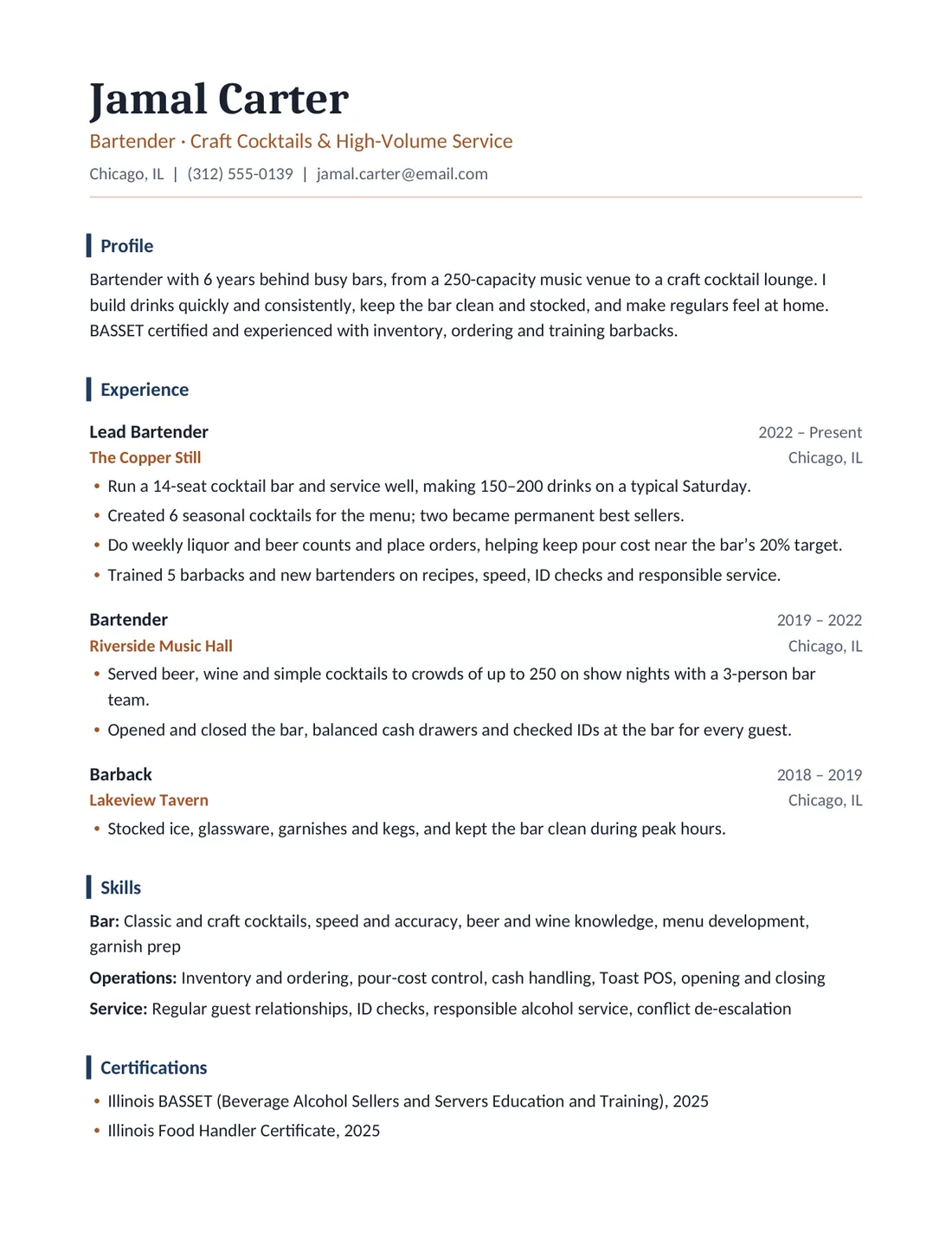
Your name, then a title that tells the manager your lane: Bartender, Lead Bartender, or Bartender · Craft Cocktails & High-Volume Service. City and state, phone and email.
Profile
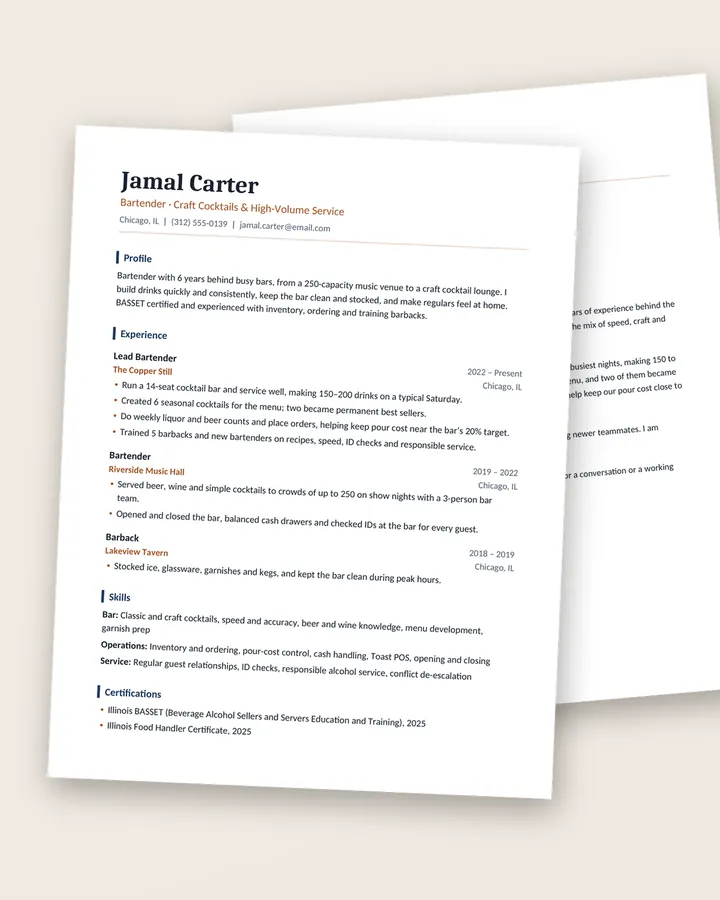
Example: Bartender with 6 years behind busy bars, from a 250-capacity music venue to a craft cocktail lounge. I build drinks quickly and consistently, keep the bar clean and stocked, and make regulars feel at home. Certified in responsible alcohol service and experienced with inventory, ordering and training barbacks.
Experience bullets
Mix volume, craft and trust:
Example bullets (fictional, replace with your own):
- Work a 3-well bar at a 250-capacity music venue, serving several hundred drinks on sold-out nights while keeping ticket times short.
- Built and wrote specs for a seasonal cocktail list of 8 drinks with the bar manager; two stayed on the permanent menu.
- Run weekly liquor, beer and wine counts and help place orders, keeping variance low.
- Check IDs at the bar on every order that needs one and handle refusals calmly; no violations during my time on staff.
- Trained 4 barbacks to bartend, covering speed rail setup, classic specs and closing procedures.
If you don’t have exact counts, describe the scene honestly: “busy weekend bar at a 120-seat restaurant” still gives the manager a picture.
Skills
- Drinks: classic and modern cocktails, beer and draft systems, wine by the glass, non-alcoholic options
- Service: speed and multitasking, upselling, building regulars, responsible service and ID checks
- Bar operations: setup and breakdown, inventory counts, ordering, batching and prep, cleaning and sanitation
- Systems: POS tools you’ve used (for example Toast, Square, Aloha) and any inventory apps
Part 2: your first bartender resume, with no bar experience
Plenty of bartenders started as servers, barbacks, hosts or baristas. Managers know this. Your goal is to show you already have most of the skills and are serious about the rest.
Lead with the closest experience
Rank your jobs by how bar-like they are: barback, server or cocktail server, banquet or event staff, coffee shop barista, fast food, retail. Put the most relevant first and describe it in bartending terms.
Example bullets for a first bartender resume (fictional):
- Server: Took drink orders for a 5-table section and learned the full cocktail and wine list; often helped the bartender restock and garnish during rushes.
- Barista: Made 200+ drinks on a typical morning shift, following recipes exactly and keeping the line moving.
- Event staff: Poured beer and wine at festivals and weddings, checked IDs and handled cash and card payments.
- Retail cashier: Balanced the drawer every shift and handled returns and disputes calmly.
Show what you’ve learned on your own
Bar managers like people who prepare. You can include a short Training & Certifications section with:
- Your state’s responsible alcohol service certification (get this before you apply; it’s quick and often inexpensive, and some states require it).
- A food handler card if your area requires one.
- A bartending course, if you took one, listed honestly as training.
In your profile, be direct: “Server with 3 years of full-service experience, ready to move behind the bar. Certified in responsible alcohol service, comfortable with the classics, and happy to start as a barback to learn your program.” Being willing to barback first is one of the most common ways in.
Keep your skills honest
Don’t list “mixology expert” if you haven’t worked a bar. Instead list skills you can show on your first shift: speed, accuracy, cash handling, cleanliness, memory for orders and regulars, and the classic drinks you can make.
If you have no restaurant or service work at all yet, our guide to an entry-level resume with no experience shows what else counts as experience.
Certifications section (everyone)
A short list near the bottom:
- Responsible alcohol service: TIPS, ServSafe Alcohol, or your state program (RBS in California, BASSET in Illinois and so on)
- Food handler card, if required
- First aid or CPR, if current
List only what you hold and keep dates current.
Your cover letter: keep it short and specific
Bar managers won’t read a long letter. Three or four sentences: the bar you’re applying to and why, the busiest shift you’ve handled well, your certification, and your availability for late nights and weekends. Every ResumeForge template comes with a matching cover letter, and our cover letter format guide has a simple structure.
Better yet, if the bar allows it, drop off your resume in person during a quiet hour and ask for the manager. Hospitality hiring is still very personal.
Common bartender resume mistakes
- No venue context. “Bartender, The Grove” means nothing until you say it’s a 300-seat beer hall or a 20-seat cocktail bar.
- Overclaiming. Inventing cocktail competitions or a “head bartender” title will come out in a trial shift.
- Missing certification. In many places a manager can’t schedule you without it.
- Long lists of drinks. A few signature skills beat a list of 50 cocktails.
- Hard-to-read design. Keep it one page and single column so it reads well on paper and in online applications. See how to choose an ATS-friendly template.
Choosing a bartender resume template
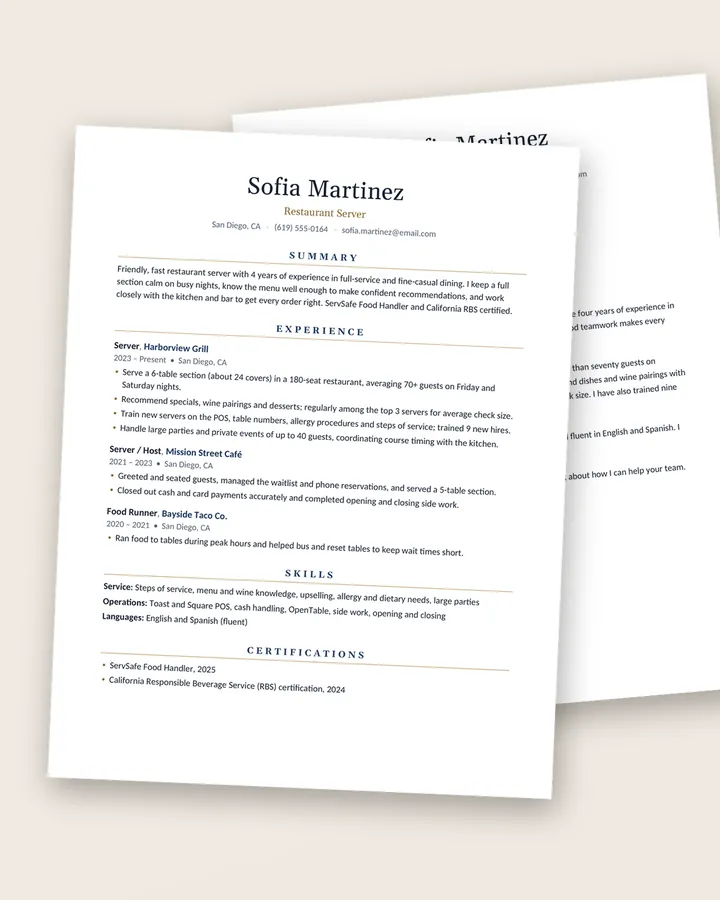
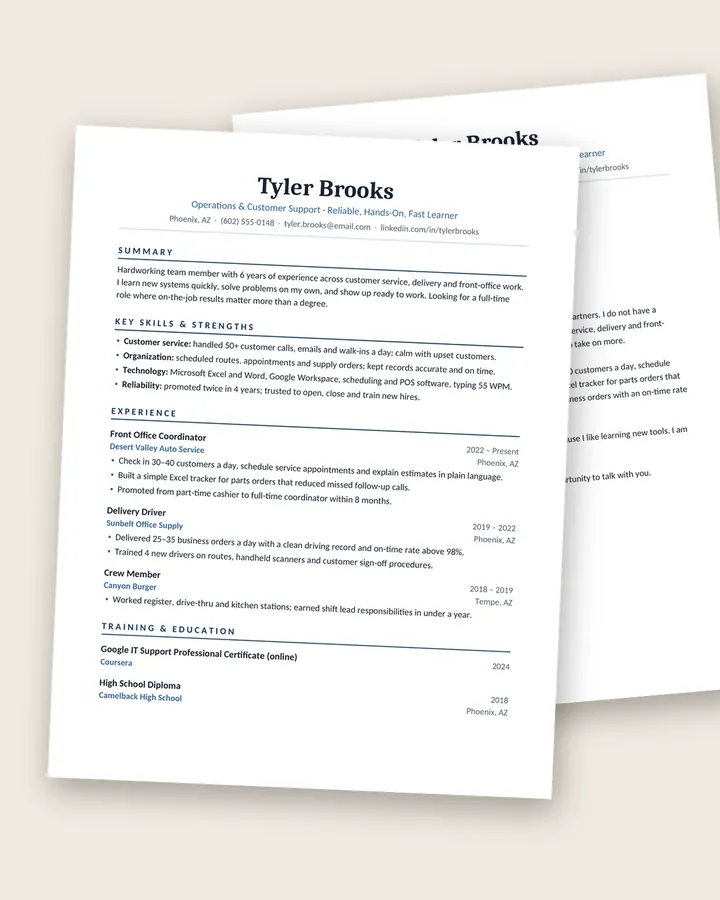
The Copper bartender resume template has a profile, experience written for bar work, grouped skills and a certifications section, plus a matching cover letter in Word and Google Docs. If most of your experience is on the floor, start with our restaurant server resume guide and the Bistro template. Coming from a mix of jobs without a degree? Groundwork puts skills first.
Before you apply
- The type of bar and its volume are clear in each job.
- Your responsible alcohol service certification is listed.
- First-timers: your closest experience is first and described in bar terms.
- Your availability is in the cover letter.
- You’ve checked everything against the free Résumé Checklist.
Free download
The Résumé Checklist
38 practical checks to run before you hit send, from your header and bullets to ATS formatting and file names. A 3-page PDF, free.
Frequently asked questions
How do I write a bartender resume with no experience?
Focus on the parts of bartending you've already done in other jobs: fast, accurate service, cash handling, staying calm during rushes, upselling, and stocking and cleaning. Barback, server, host, coffee shop and event jobs are all relevant. Get your state's responsible alcohol service certification, learn a core list of classic drinks, and say you're open to starting as a barback.
Is bartending school worth putting on a resume?
You can list a bartending course in your training section, but most bar managers value real service experience and a current alcohol service certification more. Don't present a course as if it were bar experience.
What skills should a bartender list?
Drink knowledge (classic cocktails, beer and wine basics), speed and consistency, responsible service and ID checking, cash and POS handling, inventory and ordering, bar setup and closing, and the ability to build rapport with regulars. Add the POS systems you've used.
Do I need a certification to be a bartender?
It depends on your state and sometimes your city or county. Many require a responsible alcohol service program such as TIPS, ServSafe Alcohol, RBS in California or BASSET in Illinois. Check your local rules and list the certification on your resume.
Should a bartender resume be one page?
Yes. Bar managers want short, specific bullets: the type of bar, the volume, your drink skills and your certifications.