Guide
Entry-Level Resume Template (No Experience): What to Put Where
“Entry-level” job postings often still ask for experience, which feels like a trap when you’re starting out. The way through is to recognize that experience doesn’t only mean full-time jobs. Internships, part-time work, volunteering, projects, campus roles and even caregiving or gig work all show employers the things they actually care about at this stage: reliability, communication, learning quickly and finishing what you start.
An entry-level resume template is designed to put that evidence in the right order. Here’s how to use one.
The right section order
For most people with little work history, this order works best:
- Header (name, city and state, phone, email, LinkedIn)
- Profile (two or three sentences)
- Education
- Experience (internships, part-time jobs, volunteering)
- Projects or Leadership (whichever is stronger for you)
- Skills
Once you’ve held a relevant full-time job for a year or so, move Experience above Education.
Write a profile that points somewhere
The profile tells the reader what kind of role you want and why you’d be good at it. Be specific:
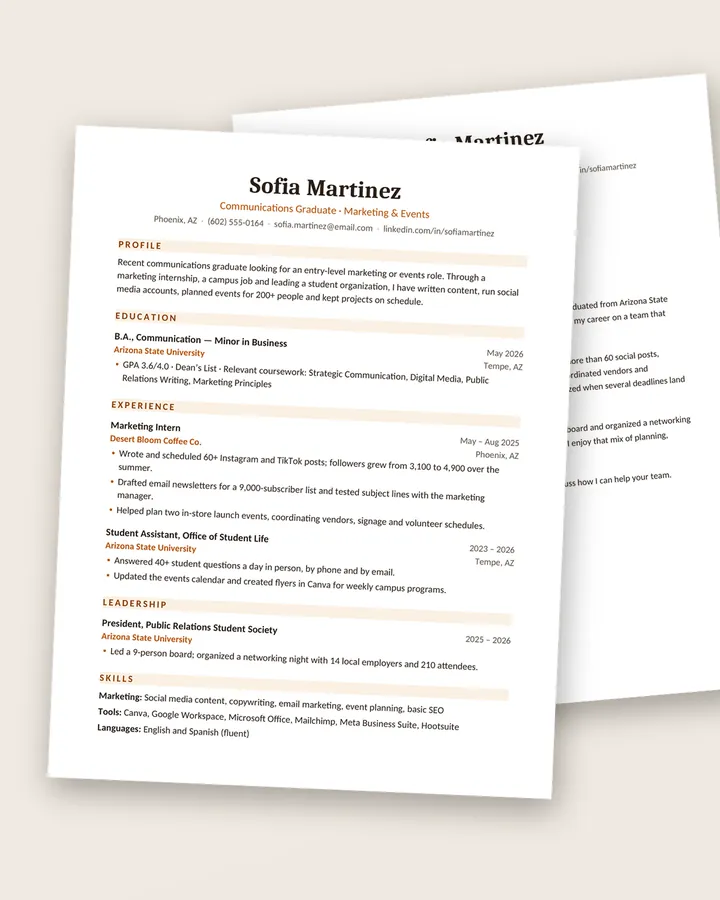
Recent communications graduate looking for an entry-level marketing or events role. Through a marketing internship, a campus job and leading a student organization, I have written content, run social media accounts and planned events for 200+ people.
Avoid generic lines like “motivated self-starter looking to grow”. Every claim should be backed up somewhere below.
Education: more than a degree name
For a recent graduate, education carries a lot of weight, so give it detail:
- Degree, major, minor, school, graduation month and year (or “Expected May 2027”)
- GPA if it’s 3.5 or higher
- Honors, scholarships, Dean’s List
- Three to five relevant courses, especially if they match the job’s keywords
What counts as experience
All of these belong in your Experience section if they’re relevant or show transferable skills:
- Internships (paid or unpaid)
- Part-time, seasonal and summer jobs
- Campus jobs (library, admissions, residence life)
- Volunteering with real responsibility
- Freelance, gig or family-business work
Write each one like a real job: title, organization, location, dates and two or three bullets that start with an action verb and include a specific detail.
Instead of: “Worked the front desk.” Write: “Answered 40+ student questions a day in person, by phone and by email, and updated the weekly events calendar.”
Instead of: “Did social media.” Write: “Wrote and scheduled 60+ Instagram and TikTok posts; followers grew from 3,100 to 4,900 over the summer.”
If you don’t have exact numbers, use honest approximations: “about 30 customers per shift”, “a team of 6”.
Projects and leadership
These sections are where entry-level candidates often stand out:
- Projects: class projects with real deliverables, personal projects, hackathons, research, a portfolio piece. Say what you built or produced and what happened.
- Leadership: club officer roles, team captain, event organizer, peer tutor, mentor. Mention the size of the group and one outcome.
Skills: specific beats general
List concrete tools and abilities the job asks for: Excel, Google Workspace, Canva, Salesforce, SQL, a second language, a forklift certification. Leave out vague traits (“hard-working”, “people person”). Show those through your bullets instead.
Common entry-level resume mistakes
- Stretching to two pages. One full page is better than two thin ones.
- Listing duties instead of results. Ask “so what?” after each bullet.
- An unprofessional email address. Use a simple firstname.lastname style address.
- Fancy layouts for online applications. Text boxes, columns and icons can scramble in applicant tracking systems. Use a single-column, ATS-friendly template.
- Sending the same resume everywhere. Adjust your profile and top bullets for each type of job.
Choosing an entry-level resume template
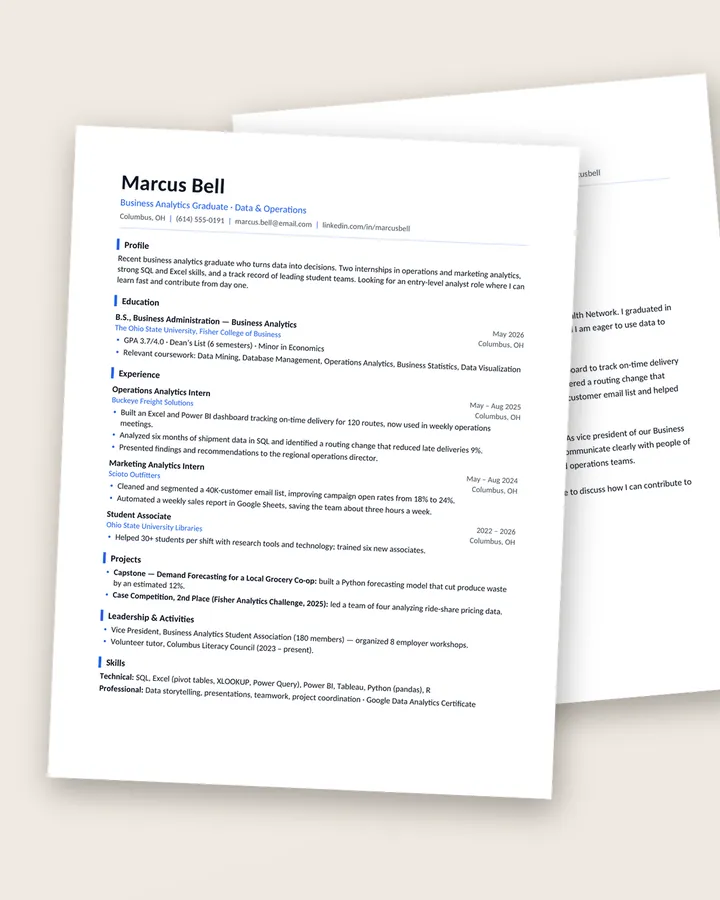
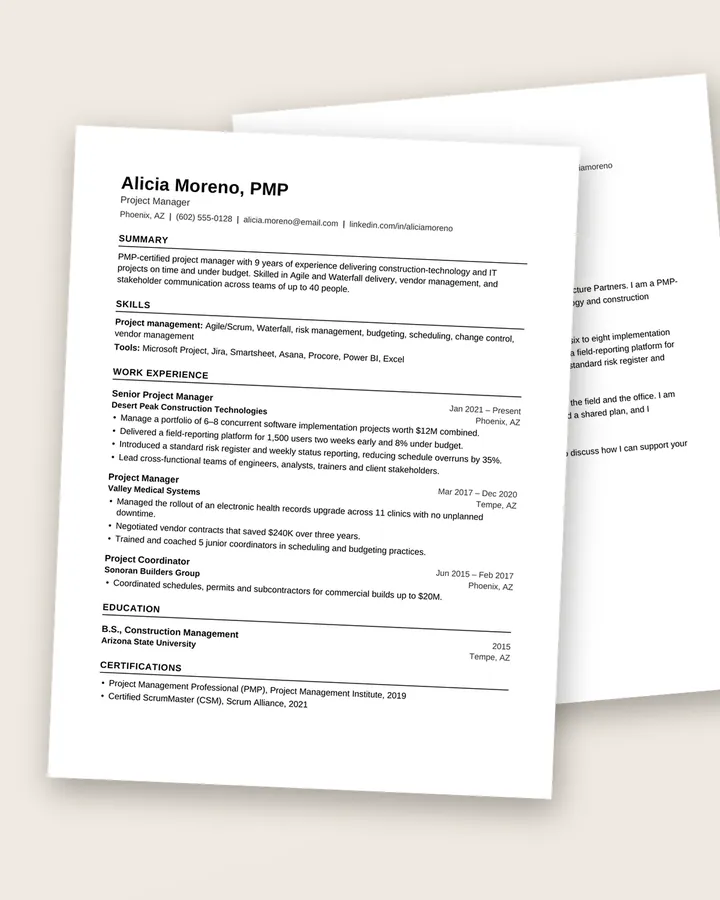
Look for a layout that puts education near the top, gives you a place for projects or leadership, and still looks polished on one page. Our Keystone entry-level resume template is built for recent graduates and first full-time jobs, with sections for experience, leadership and skills. Launch is designed for current students and very recent graduates who want education front and center, and Clarity is the plainest option if you’re applying mostly through online portals.
Still in school? Our guide to a student resume with no work experience covers coursework, campus roles and first jobs in more depth.
Before you send anything, run through the free Résumé Checklist.
Free download
The Résumé Checklist
38 practical checks to run before you hit send, from your header and bullets to ATS formatting and file names. A 3-page PDF, free.
Frequently asked questions
What do I put on a resume if I have no experience at all?
Use the experience you do have: part-time and seasonal jobs, internships, volunteering, school or personal projects, campus roles, caregiving, freelance or gig work. Describe each with specific tasks and results, just as you would a full-time job.
Should education go first on an entry-level resume?
Yes, if you graduated in the last year or two or your degree is your strongest qualification. Once you have a year or more of relevant full-time work, move experience above education.
Is a one-page resume enough for an entry-level job?
Yes. One page is the standard for entry-level roles. If you're struggling to fill it, add a projects or leadership section rather than stretching the formatting.
Do I need a summary on an entry-level resume?
A two- or three-sentence profile helps, especially if you're applying to a specific type of role. Name the field you're targeting and two or three strengths you can prove further down the page.