Guide
Restaurant Server Resume: Covers, Check Averages and Certifications
Restaurant managers don’t read server resumes the way office recruiters do. They’re often reading between a lunch rush and a pre-shift meeting, and they want to know three things fast: can you handle a full section on a busy night, will guests like you, and will you show up. A good server resume answers all three in half a minute.
Here’s how to build one, section by section. The example bullets are illustrations. Swap in your own restaurants and numbers.
Header: make it easy to call you
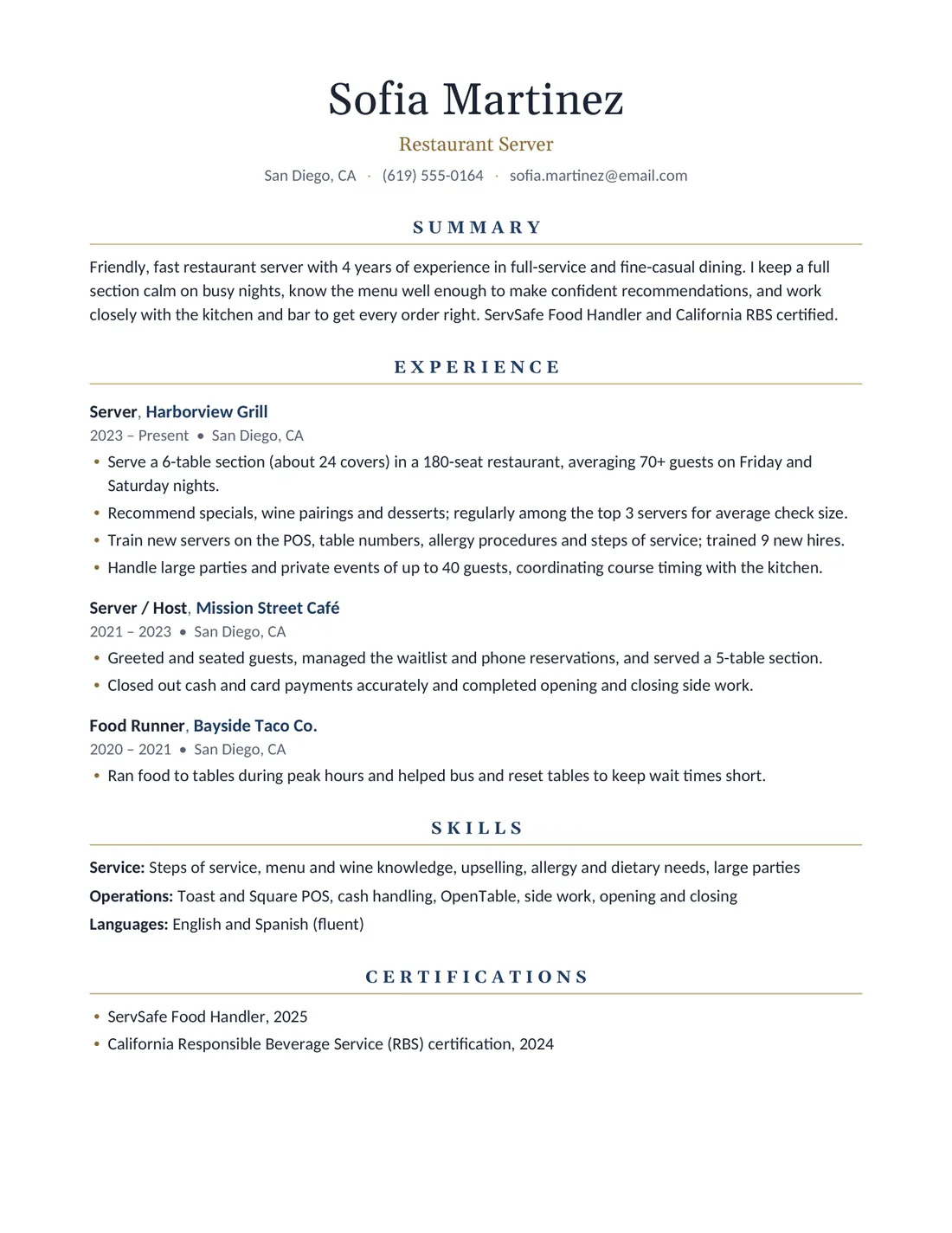
Name, the title Restaurant Server (or Server / Bartender if you do both), city and state, phone and email. Restaurants often call rather than email, so double-check your phone number and voicemail greeting.
Summary: your restaurant type and your strengths
Two or three sentences that tell the manager what kind of floor you’ve worked and what you’re good at:
Example: Friendly, fast restaurant server with 4 years in full-service and fine-casual dining. I keep a full section calm on busy nights, know the menu well enough to recommend confidently, and work closely with the kitchen and bar to get every order right. Food handler and responsible alcohol service certified.
The restaurant type matters. A fine-dining manager wants to see wine service, coursing and polish; a high-volume casual manager wants speed and table turns; a banquet captain wants event experience.
Experience: show the size of your section
Most server resumes say “took orders and served food”. Every server did that. What separates candidates is scale and quality.
Numbers that work on a server resume
- Section size: tables or covers per shift (“6-table section, about 24 covers”).
- Volume: guests served on a busy night, or the size of the restaurant.
- Sales: check average compared to the team, specials or wine sold, upsell contests won.
- Guest feedback: reviews or comment cards that named you (only if true).
- Responsibility: training new servers, closing duties, handling large parties or private events.
Example bullets (fictional, replace with your own):
- Serve a 6-table section (about 24 covers) in a 180-seat restaurant, averaging 70+ guests on Friday and Saturday nights.
- Consistently among the top servers for average check by recommending appetizers, wine pairings and desserts that fit the guest.
- Trained 9 new servers on the POS, table numbers, allergy procedures and steps of service.
- Handle parties of 12–20 and private events, coordinating timing with the kitchen so courses arrive together.
- Follow allergy protocol on every ticket: confirm with the guest, flag on the POS and check with the expo before the plate goes out.
That last bullet matters more than people realize. Allergy mistakes are a manager’s nightmare, and showing you take them seriously builds trust.
Moving up from host, busser or food runner
If you’re applying for your first serving job from a support role, describe the parts of serving you already do:
- Host: managed the waitlist and reservations, seated guests to balance server sections, handled phones and to-go orders.
- Busser or food runner: reset tables quickly, ran food accurately to the right seat numbers, learned the menu and allergy procedures.
- Fast food or coffee shop: speed, order accuracy, cash handling, staying friendly during rushes.
Skills: specific and short
A grouped skills list is easy to scan:
- Service: steps of service, menu and wine knowledge, upselling, large parties, allergy and dietary handling
- Operations: opening and closing, side work, cash handling, running food, expo support
- Systems: the POS systems you’ve used, for example Toast, Square, Aloha or Micros, plus reservation tools like OpenTable or Resy
- Languages: list any you speak. Guests and kitchen teams both value it.
Skip filler like “people person” or “hard worker”. Your bullets should prove those.
Certifications
Certifications deserve their own small section on a server resume, because many restaurants need them before your first shift:
- Food handler card (required in many states and counties)
- Responsible alcohol service: TIPS, ServSafe Alcohol, or your state’s program (for example RBS in California, BASSET in Illinois)
- ServSafe Food Handler or Manager, if you have it
- First aid or CPR, if current
List only certifications you currently hold. If one is in progress, you can write “(in progress, expected December 2026)”.
Education
Keep it to one line: high school, GED or any college. A hospitality program or culinary class is worth mentioning. Nobody needs a degree to be a great server.
Availability belongs in the cover letter
Managers schedule around nights, weekends and holidays. Don’t clutter your resume with a schedule, but do mention your availability in a short cover letter or the application form: “I’m available evenings, weekends and holidays, and can pick up extra shifts during the holiday season.” That sentence can be the reason you get the call.
Your cover letter can be four or five sentences: the restaurant you’re applying to, why you like it, one example of a busy shift you handled well, and your availability. Every ResumeForge template includes a matching cover letter, and our cover letter format guide covers the basics.
Common server resume mistakes
- Listing duties, not results. “Took orders, delivered food, cleaned tables” says nothing new.
- Too much text. Keep bullets to one or two lines.
- Missing certifications. If the restaurant serves alcohol, they’ll want to see your alcohol service card.
- Unexplained gaps between seasonal jobs. It’s normal in restaurants. A simple label like “Seasonal” next to a job removes the question.
- A fancy design. Big restaurant groups use online applications that read plain text best. A clean single column is safest. See what makes a resume template ATS-friendly.
Also bartending?
Many servers want to move behind the bar. If that’s you, read our bartender resume guide, which covers how to show bar knowledge you’ve gained as a server, even before you’ve worked a bar shift. If you’re applying for host or front-desk jobs, our customer service resume guide has examples for those settings.
Choosing a server resume template
The template should be one page, single column, with room for short bullets and a separate certifications section. The Bistro restaurant server resume template follows that structure and includes a matching cover letter, in Word and Google Docs, US Letter and A4. If you split time between the floor and the bar, Copper is built for bartenders, and Harbor suits general customer service roles.
Before you apply
- Your title says Restaurant Server (or matches the posting).
- At least two bullets show scale: section size, covers or volume.
- Your certifications are listed with any required state program.
- You mention availability in your cover letter or application.
- You’ve run through the free Résumé Checklist.
Free download
The Résumé Checklist
38 practical checks to run before you hit send, from your header and bullets to ATS formatting and file names. A 3-page PDF, free.
Frequently asked questions
What should I put on a server resume?
Your section size and covers per shift, the type of restaurant (fine dining, casual, banquet), sales or upselling results, the POS systems you've used, food-safety and alcohol-service certifications, and anything you did beyond serving, such as training new hires or opening and closing.
How do I write a server resume with no experience?
Use any job where you served people quickly and stayed calm: fast food, coffee shops, retail, hosting, catering, volunteering at events. Highlight speed, accuracy, cash handling and teamwork, get a food handler card, and say clearly that you're available for nights and weekends if you are.
Should I include tips on my resume?
Usually not as a dollar figure. Tips depend on the restaurant and are personal income. Check averages, upsell results, guest reviews that mention you, and being trusted with large parties or VIP tables are better evidence of the same skill.
What certifications help a server get hired?
A food handler card, required in many states and counties, and a responsible alcohol service certification for your state, such as TIPS, ServSafe Alcohol, RBS in California or BASSET in Illinois. ServSafe Food Handler is widely recognized. List the ones you hold with their expiry dates if relevant.
How long should a server resume be?
One page. Restaurant managers often read resumes between shifts, so short, specific bullets win.