Guide
Resume Template for a Career Change: Structure, Summary and Examples
When you change careers, a recruiter skimming your resume has one question: why is this person applying here? If your resume answers that in the first few lines, your past experience becomes an asset instead of a puzzle. A good resume template for a career change is structured to do exactly that.
This guide covers the structure, how to write each section, and five worked examples. For the bigger picture on planning a move, see our guide to writing a career change resume.
Use a hybrid structure
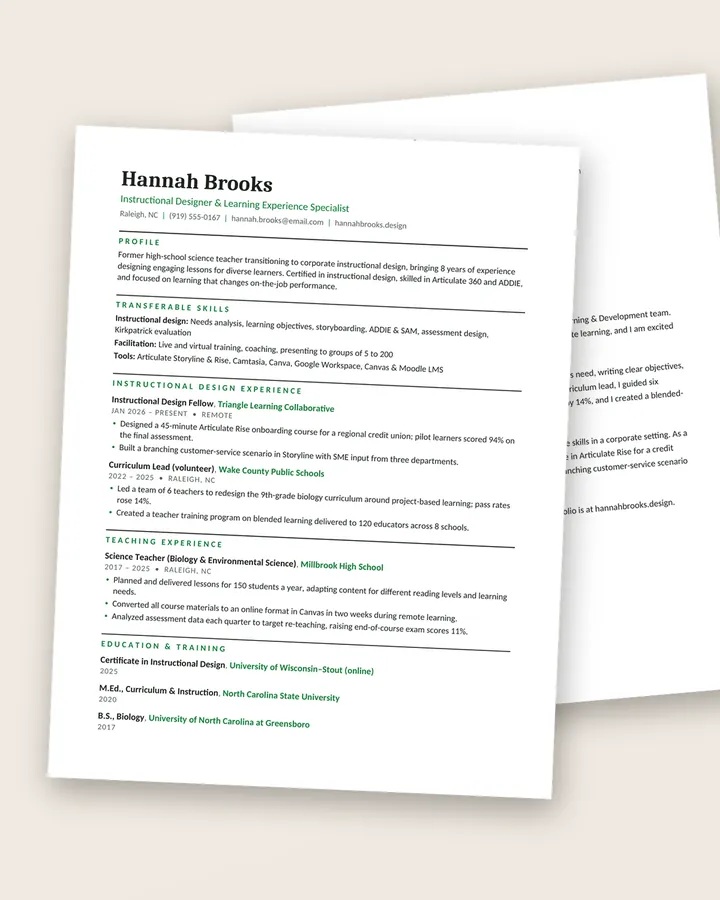
The most effective career-change resumes are hybrids:
- Header with a target title under your name (for example, Project Coordinator rather than your old job title)
- Summary that names the new field and connects your background to it
- Relevant skills grouped by the new field’s terms
- Training, certifications or projects for the new field, if you have them
- Experience in normal reverse-chronological order, with bullets rewritten for transferable value
- Education
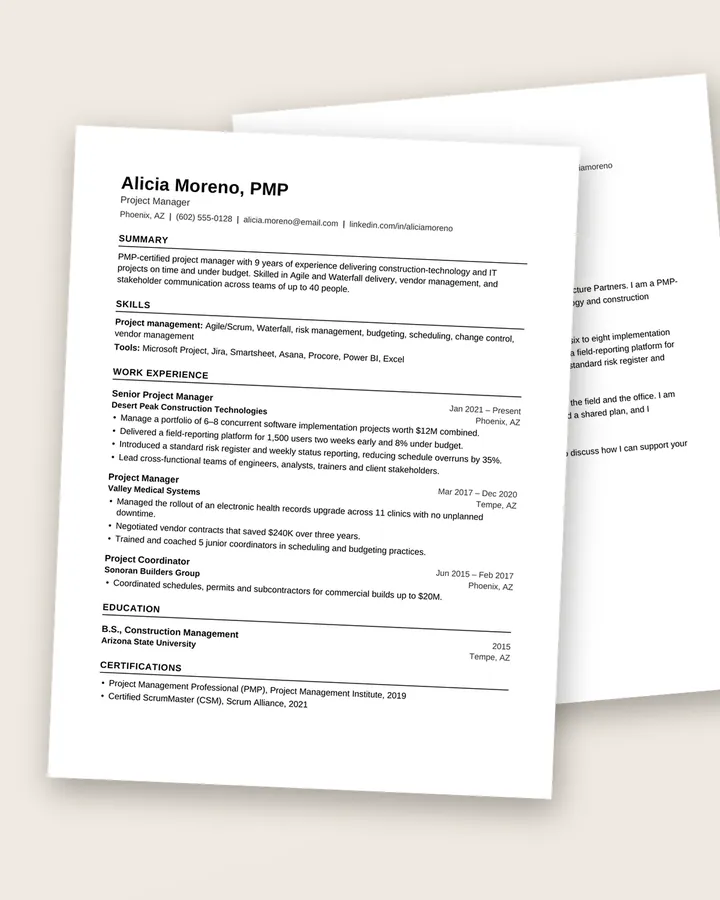
Avoid purely functional resumes that list skills with no dates or employers. Recruiters and applicant tracking systems both expect a work history, and hiding it raises more questions than it answers.
Write a summary that explains the move
Your summary should do three things in two or three sentences: name the role you’re targeting, connect your experience to it, and point to proof.
Former high school teacher moving into instructional design. Eight years designing curriculum, assessments and training for 150+ learners a year, plus a completed certificate in e-learning design and a portfolio of three Articulate Storyline modules.
Group skills in the new field’s language
Read three or four job postings for your target role and note the skills that come up repeatedly. Then group the ones you genuinely have:
- Project coordination: scheduling, stakeholder updates, budgets up to $50K, vendor management
- Tools: Asana, Smartsheet, Excel (pivot tables, lookups), Google Workspace
Use the employer’s terms. A teacher’s “lesson planning” might be an instructional designer’s “learning objectives and storyboarding”; a retail manager’s “store operations” might be an operations analyst’s “process improvement and inventory control”.
Rewrite your experience bullets
Keep every recent role, but rewrite bullets so the transferable part leads:
- Teacher → corporate trainer: “Designed and delivered 180+ hours of instruction a year, adapting materials for different skill levels; 92% of students passed the end-of-course exam.”
- Retail manager → operations: “Cut weekly inventory discrepancies by 40% by redesigning the receiving and count process across a team of 12.”
- Nurse → healthcare IT: “Super-user for the unit’s Epic upgrade: trained 30 nurses and logged workflow issues for the implementation team.”
- Military → logistics: “Managed movement of equipment worth $2M across three sites with zero losses over 18 months.”
- Hospitality → customer success: “Resolved guest issues for a 200-room hotel, raising review scores from 4.1 to 4.6 over a year.”
Notice the pattern: action + the transferable skill + a concrete result. Older or less relevant roles can shrink to one or two bullets.
Show proof you’ve started
A single relevant item can change how a recruiter reads your whole resume:
- A certificate or course (Google Project Management, CompTIA A+, a bootcamp)
- A portfolio project or volunteer work in the new field
- Freelance or side projects
- An internal project at your current job that touched the new field
Put this in its own section above your experience so it’s seen early.
Choosing a career change resume template
Look for:
- A summary and skills block above experience, so you can frame yourself before the reader reaches your job titles
- Flexible sections for training, certifications or projects
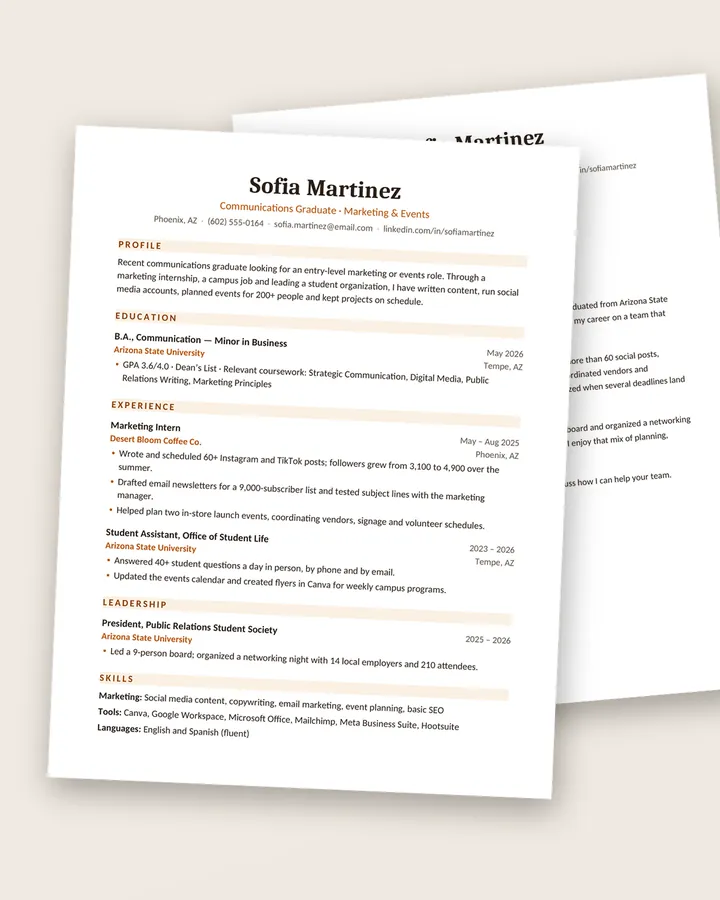
- A single-column layout for online applications. See how to choose an ATS-friendly template.
- A matching cover letter, because career changers benefit most from explaining the move
Our Pivot career change resume template is built on the hybrid structure, with a skills-first layout and a sample cover letter that explains a career switch. If you’re applying mostly through large company portals, Clarity is the most parsing-friendly option, and if you’re changing fields early in your career, Keystone works well with a strong education or training section.
Final check
- Your target title appears under your name.
- Your summary names the new field in the first sentence.
- At least three bullets show transferable results in the new field’s language.
- Every recent job is listed, with dates.
- You’ve run through the free Résumé Checklist.
Free download
The Résumé Checklist
38 practical checks to run before you hit send, from your header and bullets to ATS formatting and file names. A 3-page PDF, free.
Frequently asked questions
What resume format is best for a career change?
A hybrid (combination) format usually works best: a summary and a skills section that frame you for the new field, followed by a normal reverse-chronological work history. Purely functional resumes that hide dates tend to make recruiters suspicious.
Should I remove jobs that aren't related to my new career?
Keep recent jobs, even unrelated ones, so there are no unexplained gaps, but shorten them. Rewrite the bullets to highlight transferable work such as training, budgeting, client communication or data analysis.
Do I need a certification to change careers?
Not always, but a relevant course, certificate or portfolio project gives a recruiter concrete proof that you've started building skills for the new field. List it near the top in a Training or Certifications section.
Should I explain my career change in my resume or cover letter?
Do both briefly. One sentence in your resume summary frames the move; the cover letter is where you explain why you're changing and why this employer.